
Trump To Start Tracking Bank Transfers, Here’s Why
ICE raids make headlines. They generate footage of agents in tactical gear, protesters with megaphones, and cable news debates about enforcement tactics. Democrats have built their entire resistance strategy around the optics of raids — chaining themselves to fences, creating “rapid response” networks, filing lawsuits, and staging walkouts.
The Trump administration just found a way around all of it.
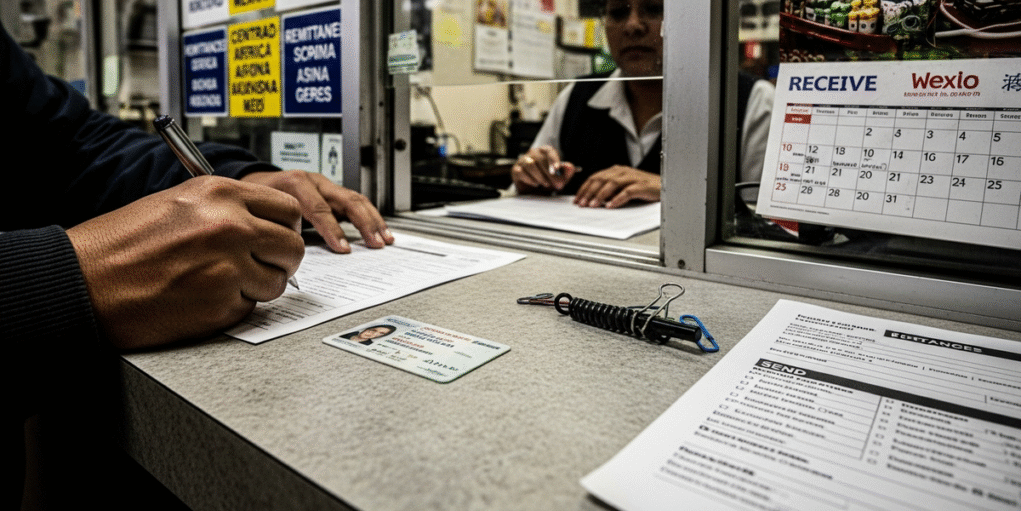
According to the Wall Street Journal, the White House is drafting plans that would require banks to collect citizenship information from customers — effectively turning the American banking system into the largest illegal immigration detection tool ever created. No raids. No cameras. No protests. Just data.
How It Works
The plan under consideration would route through the Treasury Department’s Financial Crimes Enforcement Network — FinCEN — the agency that already enforces anti-money-laundering and counterterrorism financing laws. Banks are already required to flag large cash transactions and suspicious activity. The new directive would add citizenship status to the information banks collect and report.
Every time an illegal immigrant opens a bank account, cashes a check, sends a wire transfer, or conducts a transaction that triggers existing reporting thresholds, the system would generate a data point. Aggregate those data points, and you have a map — names, addresses, employers, transaction patterns, remittance destinations. The infrastructure of a life lived inside the American financial system, visible to federal enforcement agencies without a single agent knocking on a single door.
The beauty of the approach is its quietness. ICE workplace raids require planning, manpower, legal preparation, and the inevitable media circus that follows. Bank data collection happens in the background. It’s passive. It’s continuous. And it’s invisible to the hostile media and pro-migration organizations that have built entire operations around interfering with traditional enforcement.
The Remittance Trail
The most powerful application isn’t domestic. It’s the remittance trail.
Illegal immigrants in the United States send tens of billions of dollars per year to their home countries. Every wire transfer to Mexico, Guatemala, Honduras, El Salvador, and beyond is a financial fingerprint — a transaction that identifies the sender, their location, their bank, and the amount being sent out of the American economy.
Those remittances represent money earned in the United States — often in jobs held by illegal workers using fraudulent documents — and exported to foreign economies. Every dollar sent is a dollar not spent in American communities, not taxed by American governments, and not circulating in American businesses.
Tracking remittances through FinCEN wouldn’t just identify illegal immigrants. It would quantify the economic drain — providing hard data on exactly how much money is leaving the country through illegal labor, and where it’s going.
The Quiet Deportation Machine
The administration has already demonstrated that the most effective deportation tool isn’t the dramatic raid. It’s pressure. Roughly 400,000 migrants have been formally deported. An estimated one million more have self-deported — leaving the country on their own because the enforcement environment has made staying untenable.
I-9 workplace audits are part of that pressure. ICE officers visit employers, review the legal status of workers, and let the consequences unfold. Employers, facing the threat of raids and fines, quietly fire illegal workers. The workers, cut off from income and facing an environment where the next audit could come at any time, make the calculation that leaving is easier than staying.
Bank reporting adds another layer. If illegal immigrants know that their financial transactions are being monitored — that every bank account, every wire transfer, every paycheck deposit is generating a data trail visible to federal agencies — the calculus shifts again. The banking system, like the workplace audit, becomes a quiet pressure mechanism that makes the entire infrastructure of illegal residency more difficult to maintain.
You can avoid an ICE raid by staying home. You can avoid a workplace audit by working under the table. But you can’t function in a modern economy without touching the banking system. And if the banking system is reporting your citizenship status, there’s nowhere left to hide.
The Fine Strategy
The banking initiative is part of a broader strategy that includes imposing heavy fines on illegal immigrants — penalties designed not to punish but to persuade. A fine creates a financial burden that makes staying in the country economically irrational. Combined with workplace audits, bank reporting, and the constant background pressure of an enforcement environment that’s tightening from every direction, fines become the final incentive that tips the decision toward self-deportation.
The administration doesn’t need to deport 15 million people one at a time. It needs to create conditions where 15 million people conclude, independently and individually, that the cost of staying exceeds the cost of leaving. Bank reporting, workplace audits, fines, and the elimination of benefits — each one is a pressure point. Together, they form a system that makes illegal residency progressively more difficult without requiring the massive enforcement apparatus that Democrats have spent years building defenses against.
The Opposition
Democrats and immigration advocates will frame the banking proposal as financial surveillance. They’ll compare it to authoritarian regimes that track citizens through their finances. They’ll argue that requiring banks to collect citizenship data violates privacy rights, discriminates against immigrants, and creates a chilling effect on banking access for legal immigrants and naturalized citizens.
Those arguments will generate headlines. They won’t generate results. Because the legal framework already exists. Banks already collect enormous amounts of customer data. FinCEN already requires reporting of suspicious transactions. The Bank Secrecy Act already mandates compliance with federal anti-money-laundering requirements. Adding citizenship status to the information collected doesn’t create a new surveillance regime. It extends an existing one into a space where it’s been conspicuously absent.
The question the opposition can’t answer is the simple one: why should the American banking system facilitate the financial lives of people who are in the country illegally? If you can’t legally work here, can’t legally reside here, and can’t legally access government benefits — why should you be able to bank here without anyone asking whether you’re allowed to be here?
The Trump administration is asking that question. And if the executive order is signed, the banking system will be answering it — quietly, continuously, and without a single protest sign in sight.